By, Kakoba Media
The government has announced plans to revise its national budget after the World Bank suspended funding to the country following the adoption of the Anti-Homosexuality Act.

State Minister for Finance Henry Musasizi told Parliament that the government will be coming up with a revised budget in the coming weeks, which will likely include cuts to spending on public services and infrastructure projects. Musasizi said that the government had anticipated the World Bank’s decision to suspend funding, and that it had already begun to explore alternative sources of financing.
He said that the government was confident that it would be able to find the necessary funding to implement its development plans, even without the World Bank’s support.
“We took the firm decision & we agreed that we shall face the consequences. We shall be coming soon, I want to prepare your minds, that very soon we are going to revise the budget downwards & we shall be coming to you for support. Even the emoluments are going to be affected,” he said.
The World Bank’s decision to suspend funding to Uganda is a significant blow to the country’s economy.
The World Bank is one of Uganda’s largest creditors, and its loans have been used to finance a wide range of development projects, including roads, schools, and hospitals. The Anti-Homosexuality Act, which was passed by Parliament, has been widely criticised by human rights groups and the international community. The law criminalises same-sex sexual activity and imposes harsh penalties, including life imprisonment. The World Bank has said that the Anti-Homosexuality Act is “fundamentally incompatible” with its values, and that it cannot continue to fund projects in Uganda while the law is in place. The government of Uganda has defended the Anti-Homosexuality Act, saying that it is necessary to protect traditional family values.
However, the law has been condemned by many Ugandans, who say that it is discriminatory and harmful to LGBT people. The suspension of World Bank funding is likely to have a significant impact on the Ugandan economy. The government will need to find alternative sources of financing to implement its development plans, and this could lead to cuts in public spending. The impact of the World Bank’s decision will also be felt by ordinary Ugandans.
Many people rely on government services, such as healthcare and education, and the cuts to spending could make it more difficult for them to access these services.
The suspension of World Bank funding is a major setback for Uganda’s development. The government will need to find a way to bridge the funding gap, and this could have a significant impact on the country’s economy and its people.
President Museveni also earlier released a statement, expressing that Uganda can thrive with or without the support of the World Bank. He revealed that he had been alerted by an official from the Bank about the suspension of loan requests from Uganda.
However, Museveni stated that Uganda would continue to develop and finance its economic activities, with a focus on starting oil production by 2025.
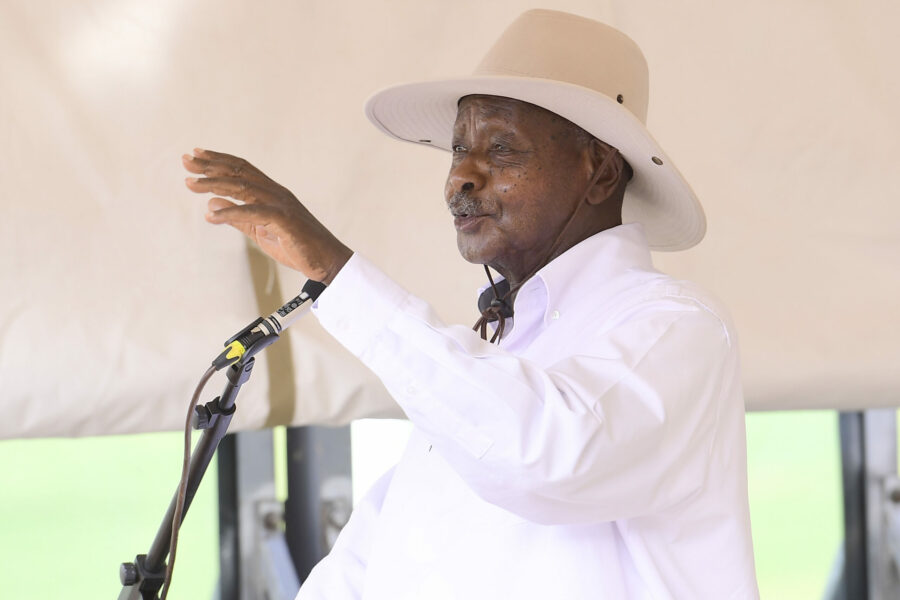
The President claimed that many loans in the past were authorized by officials without his knowledge and were unnecessary. He stressed the importance of discipline, patriotism, and combating corruption in order for Uganda to prosper. Furthermore, Museveni vowed that the World Bank and other external factors would not force Ugandans to abandon their faith, culture, principles, and sovereignty. Museveni clarified that the Anti-Homosexuality Act targets those who recruit or coerce others into homosexuality, rather than individuals who solely identify as homosexual. He assured that the country is open to addressing any illogicalities in the law.